01 · The goal — what do you want built?
0 chars
Say what the finished thing has to do , not which tools to use.
Why, and what works
Naming the tools limits the result to what you already thought of. Write as much
as you like: nothing is ever cut, and the box scrolls instead of pushing the page down.
02 · The bar — what does good look like?
no references
Reference kind
Auto
URL
Path
Words
Reference — a URL, a path on disk, or words
Add
Something real the agent can open beside its work: a URL, a file in your repo, or a sentence.
Nothing yet? Use I don’t know the bar yet at the end of the form.
Pick one of these, or drop a file on this box:
Paste a URL
Type a path
Choose a file
Describe it in words
Upload it → web link
Uploading makes the file readable by anyone with its link for about 12 hours. Keep private material out.
Which references work
Typed path The agent opens it directly. Prefer one relative to your repo
— refs/ or ./refs/hud.png — because it resolves wherever the
run works. An absolute path like C:\refs opens only on this machine.
Chosen file Browsers give us the file name, never the folder . Tell us the folder once and we remember it.
Uploaded Becomes a public web link the run can open from anywhere, for about 12 hours; the kit keeps its own copy.
A web link Screenshotted for you, desktop and phone, plus the page text. A bot check or an error page is flagged not the page .
Capture · Kind · Reference · State The bar is empty.
Everything you add shows up here: what the agent will be given, anything wrong with it, and the screenshots where we have them.More — scroll
03 · Where it runs — the window you paste into, not the model
Claude Code
Claude Code
/effort — a supported level, Ultracode off
The CLI, whatever model it runs. A kit made here has hooks and role files only Claude Code reads.
Grok Build
/goal <objective> --budget N
node run-kit/relay/bin/relay.mjs run
The CLI, whatever model it runs. Needs goal.enabled and a trusted folder (/hooks-trust); untrusted, the hook and AGENTS.md are skipped silently.
The CLI, whatever model it runs. Trust the folder once (/hooks-trust) or the hooks are skipped silently — the doctor checks it.
Relay 5.0-beta.3 Grok Build only. A supervisor starts one fresh session per
round, checks the record between rounds and holds your caps as boundary checks. Every session
runs with approvals off. Not yet measured on a paid run. What Relay adds
Relay’s
supervisor is written for Grok Build’s headless mode; there is no Claude Code edition yet.
Pick Grok Build and the tick applies. Relay needs a ledger
to check and a handover to start from; the plain Gauntlet has neither. Pick the Duel or the
Ratchet and the tick applies.
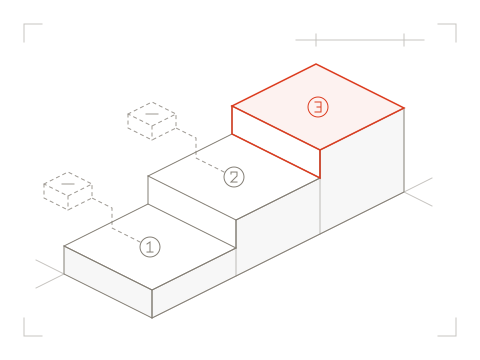
04 · Loop strength — what differs is attempts a round, and what you ship
Duel
Gauntlet
1× · the unit
build → get judged → fix
The original, and the cheapest. It ships the last round. Nothing notices if a later round breaks an earlier fix — though across the eight round-to-round transitions anyone has independently re-measured, that never once happened.
Duel
~2.5–3× cost, est.
+ every round must beat the best one
Ships the best round, not the last: the winner is frozen by commit, with one line in the log every round. The duel decided every promotion in the one head-to-head anyone has run, which is why it is the default.
Ratchet
~3–3.5× cost, est.
+ a third builder on every gap
More directions tried per gap, not more re-testing : the champion, the log and the coverage map are already in the Duel . No measurement compares it with the Duel — the long, many-part runs it was built for have never been measured.
Cost is per round, against one Gauntlet round: estimated from what each round spawns, not measured.
We pick one for you from your brief. This line says why; clicking a plate overrides it.
05 · Caps — optional, and you should
no caps
Blank means no limit, and the prompt says so in words . Runs of this shape can reach hundreds of dollars .
What a cap really does
Cost Nothing here stops spending but you —
set a cap you can afford to lose, keep an eye on it, and keep a provider-side spending limit as well.
A limit does not squeeze the work into the budget. The run goes at full speed,
stops before a round it cannot afford to finish, and hands you the best version it reached
with a note saying it ran out: fewer improvements, not a half-built thing.
06 · What must always be true — required, and worth more than the rest
nothing of your own
One sentence: something someone does, and what proves it happened.
How to write one
Everything else the agent checks, it decided on by reading your brief. This one
it cannot touch or reword: it runs every round exactly as you wrote it. Keep it to one property
— two joined with “and” cannot tell you which half failed.
Every kit also carries checks for errors, repeatability,
keyboard access, and unexpected third-party calls. The binding checks can reject a
candidate in Duel and Ratchet. Speed and transfer size are measured against round zero
but are advisory . Gauntlet carries findings to its critic rather than using a gate.
A check that cannot run is reported as unrunnable, never as a pass.
One thing that must never break — and what proves it
Or upload a check you already wrote — run exactly as it ships
Selecting a file uploads it to a public URL. Anyone with
the link can read it for about 12 hours, so keep credentials and private data out.
“Sealed” means protected from the builder, not private online.
Choose a .mjs, .js or .cjs file
Nothing uploaded. A Node.js check must print a final JSON line with
satisfied: true or false and exit 0.
Captures
Nothing pending
Web links on the bar are screenshotted before you
file — desktop, phone and the page text. Nothing is waiting on one.
Cannot file yet — 01 · The goal, 02 · The bar, 06 · What must always be true still empty. “I don’t know the bar yet” needs only the goal.
File the brief
I don’t know the bar yet
Filing needs 01, 02 and 06. The second button writes a much shorter prompt: find
three to five real references, propose the criteria and the sealed check, then stop before
anything is built, so you can disagree before the money is spent.